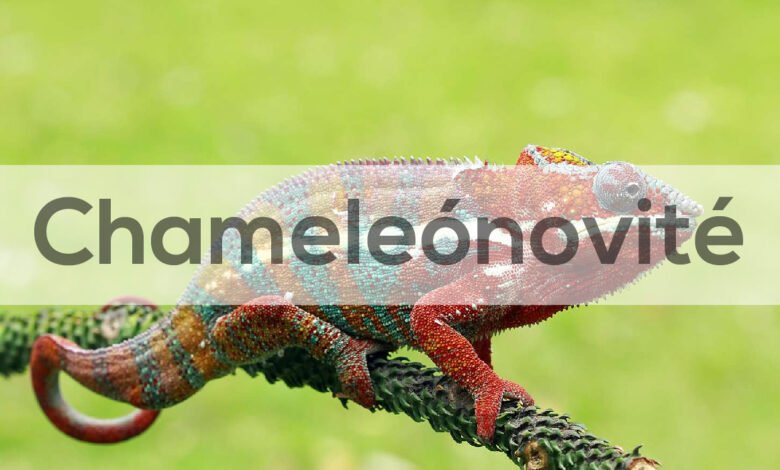
The term Chameleónovité refers to the reptile family Chamaeleonidae, which includes all species of chameleons. These reptiles are known as Old World arboreal lizards, meaning they mainly live in trees and are found in regions of Africa, Madagascar, parts of Asia, and southern Europe. Chameleónovité reptiles are famous for several unique characteristics, including their ability to change skin color, their independently moving eyes, and their long, sticky tongues used for catching insects.
Chameleons are specially adapted for life in trees. They have strong gripping feet, a prehensile tail that acts like a fifth limb, and excellent vision that helps them detect prey and predators. More than 200 species belong to the Chamaeleonidae family, ranging from tiny dwarf chameleons only a few centimeters long to much larger species that can grow over half a meter in length. Understanding what Chameleónovité are helps reveal how evolution shaped these remarkable reptiles into one of the most specialized groups of lizards on Earth.
Introduction to Chameleónovité
Chameleons are among the most fascinating reptiles on Earth. Their unusual appearance and extraordinary abilities have attracted the curiosity of scientists, nature lovers, and wildlife photographers for centuries. These reptiles are famous for their ability to change color, rotate their eyes independently, move slowly through tree branches, and capture prey with long, lightning-fast tongues. Such remarkable adaptations make them one of the most specialized groups of reptiles in the natural world.
The term Chameleónovité is used in the Czech and Slovak languages to describe the reptile family scientifically known as Chamaeleonidae. This family includes more than 200 known species of chameleons. Most of them live in warm regions of Africa, particularly Madagascar, although some species are also found in parts of Asia, the Middle East, and southern Europe. These reptiles have evolved to survive in a variety of environments, including tropical forests, mountain woodlands, and dry savannas.
Chameleons play an important role in ecosystems because they help control insect populations and serve as prey for larger animals. Interest in Chameleónovité has grown as people search for reliable information about their biology, unique abilities, conservation status, and even their care as exotic pets. This article explores the meaning and classification of chameleons, their remarkable biological adaptations, habitats, behavior, reproduction, ecological importance, and conservation efforts needed to protect these extraordinary reptiles.
Scientific Classification of Chameleónovité
Chameleons belong to a specific group within the reptile kingdom. Their scientific classification helps researchers understand their evolutionary relationships with other reptiles and animals.
Biological Classification
Kingdom – Animalia
Phylum – Chordata
Class – Reptilia
Order – Squamata
Suborder – Iguania
Family – Chamaeleonidae
This classification places chameleons within the order Squamata, the largest group of reptiles that also includes snakes and most lizards. Within this order, chameleons belong to the suborder Iguania, which means they are related to iguanas, anoles, and other tree-dwelling lizards. Despite these connections, chameleons developed several highly specialized features that set them apart from their relatives.
Over millions of years of evolution, chameleons diverged from other iguanian lizards. During this process, they developed unique characteristics such as independently moving eyes, grasping feet, a prehensile tail, and a highly specialized tongue for hunting insects. These traits allowed them to become extremely successful in arboreal environments where balance, camouflage, and precise hunting abilities are essential for survival.
Evolution and Origins of Chameleónovité
The evolutionary history of Chameleónovité stretches back millions of years. Fossil evidence suggests that early ancestors of chameleons lived during the Paleogene period, possibly around 60 million years ago. These early reptiles gradually adapted to arboreal environments where climbing ability and camouflage provided survival advantages.
Scientists believe that chameleons originally evolved in Africa before spreading to nearby regions. Over time, populations became isolated in different habitats, leading to the formation of many distinct species. Madagascar eventually became the center of chameleon diversity because of its long geographic isolation and rich tropical ecosystems.
As chameleons adapted to life in trees and shrubs, they developed several specialized features. Their gripping feet evolved to help them hold branches securely, while their prehensile tails allowed them to maintain balance while climbing. The famous projectile tongue also developed during this evolutionary process, giving chameleons an efficient method for catching fast-moving insects.
Perhaps the most remarkable adaptation is their color-changing skin. Although early reptiles possessed simple pigment cells, chameleons evolved a complex system of skin structures that allow them to adjust colors rapidly for communication and environmental adaptation. Today, Madagascar hosts nearly half of the world’s chameleon species, making it the most important region for studying the evolution of Chameleónovité.
Physical Characteristics of Chameleónovité
Chameleons possess several physical features that make them different from most other lizards. These characteristics are highly specialized for life in trees and for their unique hunting style.
Body Shape and Size
Chameleon species vary greatly in size. Some dwarf chameleons measure less than three centimeters in length, making them among the smallest reptiles in the world. In contrast, larger species such as the Parson’s chameleon can grow more than 60 centimeters long. Most species have flattened bodies and laterally compressed shapes, which help them move easily through branches and leaves.
Prehensile Tail
One of the most important features of chameleons is their prehensile tail. This tail can curl around branches and act as a support while the animal climbs or rests. The tail functions like an extra limb, giving chameleons excellent balance when navigating through complex vegetation.
Zygodactyl Feet
Chameleons also have specialized feet called zygodactyl feet. Each foot has toes fused into two opposing groups, creating a pincer-like grip. This design allows them to hold branches firmly even while moving slowly or reaching for prey. Together with their strong tails and flexible bodies, these adaptations make chameleons excellent climbers.
The Science Behind Chameleon Color Change
One of the most famous characteristics of Chameleónovité is their ability to change color. Many people believe this adaptation is only used for camouflage, but in reality, color change serves several important purposes.
The skin of a chameleon contains multiple layers of specialized cells. The upper layer includes chromatophores, which contain pigments responsible for colors such as yellow, red, and brown. Beneath these cells are iridophores, which contain microscopic crystals that reflect light. These nanocrystal structures can shift slightly to reflect different wavelengths of light, creating changes in color.
When a chameleon adjusts the spacing of these crystal structures, it alters how light is reflected from its skin. This allows the reptile to display different colors ranging from greens and blues to bright yellows and reds.
Color change helps chameleons communicate with other individuals. For example, males often display bright colors to attract females during mating season. Dominant males may also show intense colors when defending their territory. Darker shades may appear when the animal is stressed or cold, helping regulate body temperature by absorbing more heat from sunlight.
Therefore, color change in chameleons is not only about hiding from predators. It is also a complex system used for communication, emotional expression, and environmental adaptation.
Vision and Sensory Abilities
Chameleons possess one of the most advanced visual systems among reptiles. Their eyes are large, dome-shaped, and capable of moving independently of each other. This unique structure allows them to observe two different directions simultaneously.
Independent Eye Movement
Each eye can rotate separately, allowing a chameleon to scan its surroundings without moving its body. This ability helps them watch for predators while also searching for food.
360-Degree Vision
Because their eyes move independently, chameleons have nearly 360-degree vision. This wide visual field helps them detect movement from almost any direction.
Depth Perception
When a chameleon focuses on prey, both eyes move forward to create precise depth perception. This ability allows them to calculate distance accurately before launching their tongue to capture insects.
Some research suggests that certain species may even detect ultraviolet light, giving them additional advantages in identifying food or potential mates.
Feeding Behavior and Hunting Strategy
Chameleons are primarily insect-eating reptiles. Their diet consists mainly of crickets, grasshoppers, flies, beetles, and other small invertebrates. Larger species may occasionally eat small reptiles, birds, or rodents.
Their hunting technique is based on patience and precision. Chameleons often remain motionless on a branch for long periods while observing their surroundings. When prey comes within range, they strike with incredible speed.
The chameleon’s tongue is one of the most impressive hunting tools in the animal kingdom. It can extend to more than twice the length of the animal’s body and can launch toward prey in a fraction of a second. The tip of the tongue is covered in sticky mucus that allows it to grip insects instantly before pulling them back into the mouth.
This ambush hunting strategy allows chameleons to conserve energy while still capturing fast-moving prey.
Natural Habitat and Geographic Distribution
Chameleons live mainly in warm regions of the Old World. The largest number of species is found in Madagascar, which hosts an extraordinary variety of chameleons. Other species occur across sub-Saharan Africa, the Arabian Peninsula, southern Europe, and parts of Asia.
These reptiles occupy many different habitats. Tropical rainforests provide dense vegetation and humidity that many species prefer. Mountain forests offer cooler temperatures and unique ecological niches. Some chameleons also live in savannas, dry woodlands, and semi-desert regions.
Each species has adapted to the specific conditions of its environment. For example, forest species often display bright green colors that blend with leaves, while desert species may show brown or gray shades that match dry vegetation and soil.
Famous Species of Chameleónovité
Several chameleon species are well known for their unique appearance and behavior.
The Panther Chameleon (Furcifer pardalis) from Madagascar is famous for its extremely bright colors and striking patterns. Different geographic populations display different color combinations.
The Veiled Chameleon (Chamaeleo calyptratus) is recognized by the tall casque structure on its head and is one of the most commonly kept pet species.
The Meller’s Chameleon (Trioceros melleri) is one of the largest chameleon species and can grow over half a meter long.
Jackson’s Chameleon (Trioceros jacksonii) is easily identified by the three horn-like structures on the male’s head.
The Parson’s Chameleon (Calumma parsonii) is among the largest and most impressive species, known for its large size and vibrant coloration.
Behavior and Communication
Chameleons are generally solitary animals. They rely heavily on visual signals to communicate with each other.
Color displays are a primary method of communication. Bright colors may signal dominance or readiness to mate, while dull colors may indicate submission or stress. Body posture also plays an important role in communication. Chameleons may puff up their bodies, open their mouths, or hiss to warn rivals or predators.
Territorial behavior is common, especially among males. When two males encounter each other, they often display bright colors and intimidating body postures. Physical fights are rare because these visual signals usually resolve the conflict.
Reproduction and Life Cycle
Most chameleon species reproduce by laying eggs. During the breeding season, males display bright colors to attract females. After mating, females search for suitable locations in the soil where they can dig holes to deposit their eggs.
The number of eggs varies by species. Some small species may lay only a few eggs, while larger species can produce more than 50. The incubation period depends on temperature and environmental conditions and may last several months.
When the eggs hatch, baby chameleons are fully independent. They immediately begin hunting small insects and must survive without parental care. Lifespan varies among species, but many chameleons live between three and ten years.
Role of Chameleónovité in Ecosystems
Chameleons play an important ecological role in their environments. As insect predators, they help control populations of insects that could otherwise damage vegetation or spread disease.
They are also part of the food chain. Birds, snakes, and small mammals may prey on chameleons. This interaction helps maintain balance within ecosystems.
Because many species are sensitive to environmental changes, chameleons can act as indicators of ecosystem health. Declining populations may signal habitat destruction or environmental stress.
Chameleónovité as Exotic Pets
Chameleons attract many reptile enthusiasts because of their unusual appearance and behaviors. Watching them change color or hunt insects can be fascinating. However, they are not easy pets to care for.
Chameleons are sensitive animals that require very specific environmental conditions. They are also easily stressed by excessive handling. For this reason, they are better suited for experienced reptile keepers.
Species such as the Veiled Chameleon and Panther Chameleon are commonly kept in captivity because they adapt relatively well to controlled environments.
Proper Care for Pet Chameleons
Proper care for chameleons requires careful attention to their environment and diet. Enclosures should be tall rather than wide because these reptiles prefer climbing spaces.
Terrariums should include branches, plants, and proper ventilation. UVB lighting is essential because it allows chameleons to produce vitamin D3, which is necessary for healthy bone development.
Humidity levels must also be carefully controlled. Many species require regular misting to maintain proper hydration. Diet should consist of live insects such as crickets and roaches that are supplemented with vitamins and calcium.
Without proper care, chameleons can develop serious health problems such as metabolic bone disease, dehydration, and respiratory infections.
Conservation Status of Chameleónovité
Many chameleon species face threats from human activities. Deforestation, especially in Madagascar, destroys the natural habitats that these reptiles depend on. Climate change also affects temperature and rainfall patterns, which can impact their survival.
Another major threat is the illegal wildlife trade. Some species are captured from the wild and sold as exotic pets, reducing wild populations.
Conservation organizations and wildlife protection programs are working to preserve chameleon habitats and promote captive breeding programs. Several species are now listed on the IUCN Red List as threatened or endangered.
How Humans Can Help Protect Chameleónovité
People can help protect chameleons in several ways. Supporting conservation organizations that protect forests and wildlife habitats is one important step.
Responsible pet ownership is also essential. Buying chameleons from reputable breeders instead of wild-caught animals helps reduce pressure on natural populations.
Education and awareness are powerful tools for conservation. When people understand the ecological importance of chameleons, they are more likely to support efforts that protect biodiversity and natural ecosystems.
Interesting Facts About Chameleónovité
Chameleons have many surprising characteristics that make them unique among reptiles.
Their tongues can accelerate faster than many sports cars when catching prey.
The smallest chameleon species measures less than three centimeters long.
Some species can display extremely bright colors during social interactions.
Madagascar contains the highest diversity of chameleon species anywhere in the world.
Certain species can even see ultraviolet light.
These fascinating traits continue to inspire scientific research and increase public interest in chameleon biology.
Conclusion
The family Chameleónovité, also known as Chamaeleonidae, represents one of the most remarkable groups of reptiles on Earth. Their independent eyes, color-changing skin, specialized climbing feet, and lightning-fast tongues demonstrate extraordinary evolutionary adaptation. These features allow chameleons to survive in diverse habitats ranging from tropical forests to dry savannas.
Beyond their fascinating appearance, chameleons play an important role in ecosystems by controlling insect populations and contributing to ecological balance. Their presence can also help scientists monitor environmental health and biodiversity.
However, many species face increasing threats from habitat destruction, climate change, and illegal wildlife trade. Protecting these animals requires global conservation efforts, responsible pet ownership, and continued scientific research.
By understanding the biology and importance of Chameleónovité, we can better appreciate these extraordinary reptiles and support efforts to preserve them for future generations. Their survival is not only essential for nature but also for maintaining the rich diversity of life on our planet.
(FAQs) Frequently Asked Questions
1. What does Chameleónovité mean?
Chameleónovité is the Czech and Slovak term used for the reptile family Chamaeleonidae, which includes all species of chameleons. These reptiles are known for their color-changing ability, independently moving eyes, and long sticky tongues used for catching prey. The term is commonly used in scientific and educational discussions in Central European languages.
2. Where do Chameleónovité mainly live?
Most chameleon species live in Africa and Madagascar, where warm climates and rich vegetation provide ideal conditions. Some species also live in parts of the Arabian Peninsula, southern Europe, and Asia. They usually inhabit forests, savannas, woodlands, and sometimes dry or semi-desert environments.
3. Why do Chameleónovité change color?
Chameleons change color mainly for communication, temperature regulation, and emotional expression, not only for camouflage. Different colors can show dominance, stress, readiness to mate, or submission to other chameleons. Specialized skin cells called chromatophores and iridophores allow them to produce these color changes.
4. What do Chameleónovité eat in the wild?
Most chameleons are insectivores, meaning they mainly eat insects such as crickets, grasshoppers, flies, and beetles. Larger species may occasionally eat small reptiles, birds, or rodents. They capture prey using a long, sticky tongue that can extend more than twice the length of their body.
5. How long do Chameleónovité usually live?
The lifespan of chameleons varies depending on the species and their living conditions. Smaller species may live 2 to 5 years, while larger species like the veiled chameleon can live 5 to 10 years in proper care. In the wild, their lifespan may be shorter due to predators and environmental challenges.